
The Complete Bathroom Renovation Guide for Hawke's Bay
Everything you need to know before renovating your bathroom—from planning and budgeting to design, product selection and construction.
Is It Time to Renovate Your Bathroom?
A bathroom renovation is one of the most rewarding improvements you can make to your home. A well-designed bathroom can improve your daily routine, increase your home's value and make better use of the available space.
However, not every bathroom needs a complete renovation. Sometimes replacing fixtures or updating finishes is enough. Other times, hidden plumbing issues, poor layouts or ageing waterproofing make a full renovation the smarter long-term investment.
If you're unsure whether it's the right time to renovate, the checklist below is a good place to start.
Planning a bathroom renovation in Taradale? Build Mac provides complete bathroom renovations across Taradale, Napier and the wider Hawke’s Bay region.
Bathroom Renovation Scorecard
Ask yourself these questions:
✅ Is your bathroom more than 20 years old?
✅ Does the layout feel cramped or awkward?
✅ Is there never enough storage?
✅ Does the room suffer from condensation or poor ventilation?
✅ Are tiles cracked, loose or dated?
✅ Is the shower difficult to clean?
✅ Is the vanity too small for your needs?
✅ Are there signs of mould or water damage?
✅ Is the lighting poor?
✅ Does your bathroom no longer suit your family's lifestyle?
Your Results
0–2 Yes answers
Your bathroom may only need a cosmetic refresh or a few upgrades.
3–5 Yes answers
A partial or full renovation is likely worth considering.
6 or more Yes answers
A complete bathroom renovation will probably improve the functionality, comfort and long-term value of your home.
Chapter 1 - Why Homeowners Renovate Their Bathrooms
Every homeowner has different reasons for renovating, but these are some of the most common.
Improve Functionality
Older bathrooms often weren't designed for modern family living. Better layouts, improved storage and larger showers can make the room much easier to use every day.
Modernise the Appearance
Replacing outdated colours, worn fittings and ageing tiles can completely transform the look and feel of your home.
Increase Property Value
Bathrooms are one of the first rooms buyers notice. A quality renovation can improve your home's appeal and help maximise its market value.
Improve Energy and Water Efficiency
Modern toilets, tapware and shower fittings use significantly less water while maintaining excellent performance. Upgrading lighting and extraction fans can also improve efficiency and comfort.
Future-Proof Your Home
Many homeowners choose to incorporate wider showers, level-entry access and improved layouts so the bathroom remains practical for years to come.
💡 From the Build Mac Team
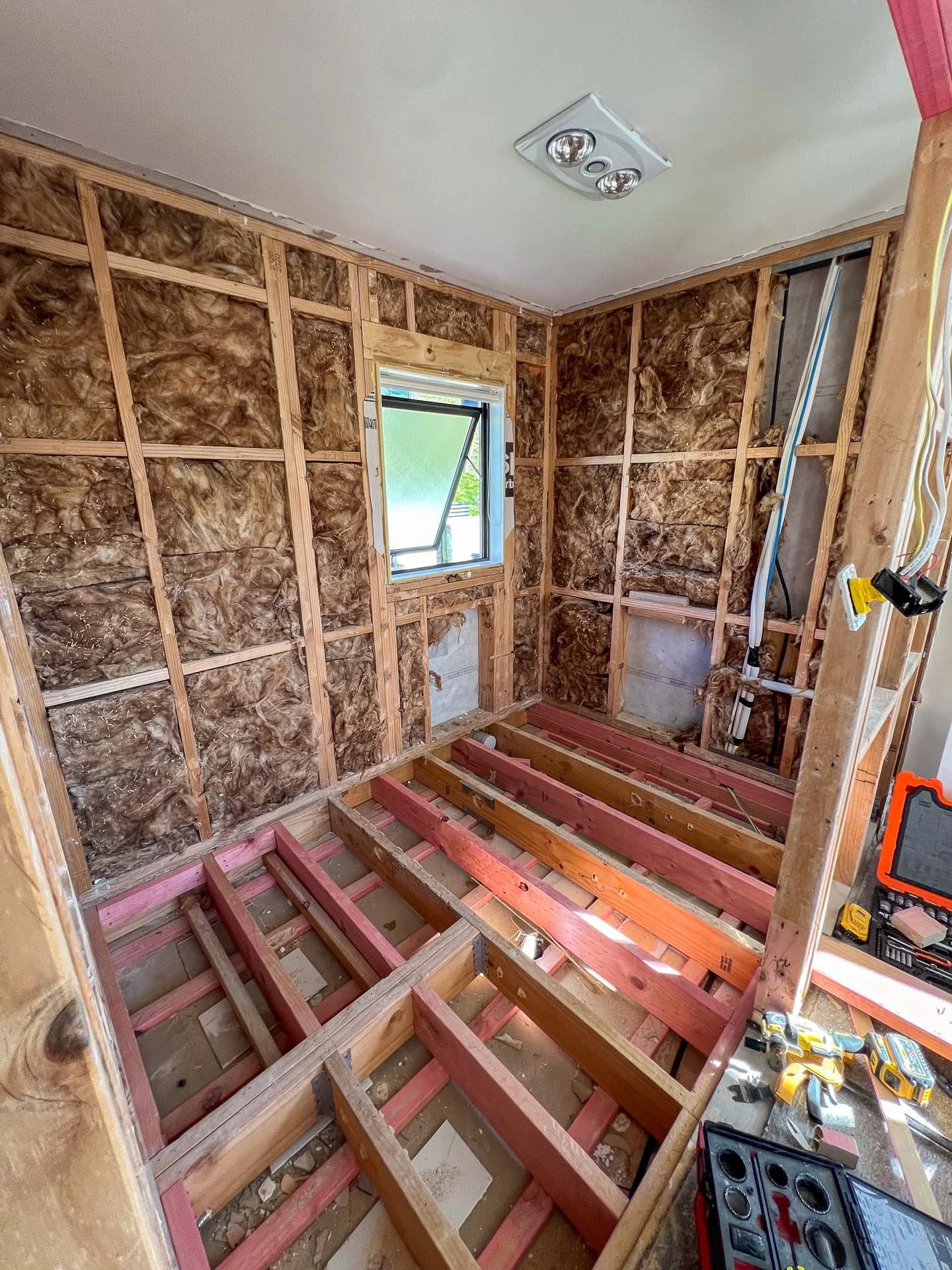
One thing we've learned over the years is that homeowners often focus on what they can see—tiles, vanities and tapware—but the real value of a bathroom renovation is often hidden behind the walls.
Replacing ageing plumbing, improving waterproofing and correcting layout issues while everything is exposed can prevent costly repairs in the future and ensure your new bathroom performs as well as it looks.
Ready for the Next Step?
If you've decided it's time to renovate, the next question is:
How do you plan a bathroom renovation so everything runs smoothly from the beginning?
In the next chapter, we'll walk you through the planning process, from setting your budget and defining your goals to choosing the right layout and avoiding common mistakes before construction even begins.
Chapter 2 – Planning Your Bathroom Renovation
A successful bathroom renovation doesn't start with choosing tiles or tapware—it starts with a clear plan.
Whether you're updating an ensuite, modernising a family bathroom or creating a luxury retreat, taking the time to plan properly can save you thousands of dollars, reduce stress and help you achieve a better result.
At BuildMac, we've found that the most successful bathroom renovations in Hawke's Bay all have one thing in common: the homeowners spent time understanding what they wanted before construction began.
Step 1: Decide What You Want to Achieve
Before looking at products or finishes, ask yourself what isn't working with your current bathroom.
Perhaps it's too small for your growing family. Maybe the layout feels awkward, there's not enough storage, or the bathroom simply looks tired after years of use.
Your renovation goals might include:
Creating a more functional layout
Increasing storage space
Improving accessibility for ageing in place
Updating outdated fittings and finishes
Repairing water damage or leaking showers
Increasing the value of your home before selling
Creating a bathroom that feels like a luxury retreat
The clearer your objectives, the easier it becomes to make design decisions throughout the renovation.
Step 3: Understand Your Existing Space
Not every bathroom requires major structural work.
Sometimes a clever redesign using the existing plumbing locations can dramatically improve the space while keeping costs under control. In other cases, moving walls or relocating fixtures creates a much better long-term solution.
During the planning stage we assess:
Existing plumbing locations
Structural walls
Window placement
Natural light
Ventilation
Waterproofing requirements
Ceiling height
Future maintenance
Understanding these constraints early helps avoid expensive surprises once construction begins.
Common Planning Mistakes
Over the years we've seen the same issues cause unnecessary cost and frustration.
Avoid these common mistakes:
Choosing products before confirming they fit the available space.
Underestimating the importance of storage.
Forgetting about ventilation and moisture control.
Prioritising appearance over functionality.
Not allowing a contingency for hidden issues behind existing walls.
Selecting finishes that are difficult to clean or maintain.
Hiring different trades without a coordinated project plan.
Careful planning reduces these risks and leads to a smoother renovation.
Step 2: Set a Realistic Budget
One of the first questions homeowners ask is:
"How much should I budget for a bathroom renovation?"
The answer depends on many factors, including the size of your bathroom, the quality of fixtures you choose, whether structural changes are required, and the condition of the existing plumbing and electrical systems.
As a general guide in Hawke's Bay:
Renovation TypeTypical InvestmentCosmetic Refresh$10,000–$25,000. Standard Bathroom Renovation$25,000–$50,000. Premium Bathroom Renovation$50,000–$70,000+
These figures are intended as planning guides only. Every renovation is different, and the best way to understand your likely investment is through a site visit and detailed discussion.
BuildMac Tip: Rather than setting a fixed budget first, think about the outcome you want to achieve. A well-designed bathroom often provides better long-term value than choosing the cheapest available option.
Step 4: Think About How You Use the Bathroom
Every household uses a bathroom differently.
A family with young children has different priorities from a retired couple or someone creating an ensuite for a new master bedroom.
Ask yourself:
Who uses this bathroom every day?
Will your needs change over the next 10–15 years?
Is storage more important than floor space?
Would a larger shower improve usability?
Do you need better lighting for shaving or makeup?
Would underfloor heating make the space more comfortable?
Good bathroom design is about improving everyday life—not simply making the room look better.
Step 5: Understand Building Consent Requirements
Many homeowners ask whether a bathroom renovation requires building consent.
The answer depends on the work being carried out.
Replacing fixtures like toilets, vanities, showers or tapware generally does not require building consent if the work complies with New Zealand Building Code requirements.
However, consent may be required if your renovation involves work such as:
Structural alterations
Changes to load-bearing walls
Significant plumbing alterations or adding plumbing fixtures
Tiled shower
Work outside the scope of exempt building work
Because every project is different, it's always worth confirming the requirements before construction begins.
BuildMac can advise you during the planning stage and organise any required building consent documentation if it's needed.
BuildMac Planning Tip
The best bathroom renovations are planned around how you live—not around what's currently trending on social media.
A beautiful bathroom should still feel practical five, ten and even twenty years from now. Timeless layouts, quality materials and thoughtful detailing almost always outperform short-lived design trends.
At BuildMac, we work with homeowners throughout Hawke's Bay to design bathrooms that balance style, practicality and long-term value. By investing time in the planning stage, we can identify potential challenges early and create a renovation plan that delivers the best possible outcome.
Coming Up Next
Now that you've established your goals and understand how to plan your renovation, the next step is one of the biggest decisions you'll make:
Should you renovate your existing bathroom layout, or completely redesign the space?
In the next chapter, we'll compare both approaches, explain when each makes sense, and help you decide which option is right for your home.
One of the biggest decisions you'll make during a bathroom renovation is whether to keep the existing layout or completely redesign the space.
At first glance, keeping everything where it is often seems like the cheaper option. In many cases it can be—but not always.
Sometimes investing a little more to improve the layout can completely transform how the bathroom functions and significantly increase the value you receive from the renovation.
The key is understanding when each approach makes sense.
Chapter 3: Renovate the Existing Layout or Start Again?
Option 1: Renovating Within the Existing Layout
If your current bathroom layout already works reasonably well, keeping the plumbing in similar locations can often reduce construction costs and shorten the renovation timeline.
This approach is ideal when:
The room already functions well.
The shower, toilet and vanity are positioned logically.
Plumbing is in good condition.
You're mainly updating the appearance.
Your budget is more limited.
By keeping major services in place, more of your investment can go towards high-quality finishes, better storage and premium fixtures.
Many successful bathroom renovations don't require a complete redesign—they simply improve what's already there.
Option 2: Completely Redesigning the Space
Sometimes the existing layout simply isn't working.
Perhaps the shower feels cramped, the vanity blocks circulation, there's little storage or the room feels dark despite having enough space.
In these situations, redesigning the layout often delivers the biggest improvement to your everyday life.
A redesigned bathroom might include:
A larger walk-in shower.
Better storage solutions.
Improved natural light.
Double vanities.
A separate toilet where space allows.
Better circulation throughout the room.
Improved accessibility for future needs.
Although relocating plumbing and electrical services may increase the initial investment, the result is often a bathroom that functions significantly better for many years.
Think Beyond Today
A bathroom renovation is something most homeowners complete only once or twice during their time in a home.
Rather than designing purely for your current needs, consider how your lifestyle may change over the next ten to twenty years.
Questions worth asking include:
Will children eventually use this bathroom?
Are you planning to stay in this home long-term?
Would improved accessibility benefit you later in life?
Will additional storage become more important?
Could a larger shower improve comfort and usability?
Designing for the future often results in a bathroom that continues to work well long after current design trends have changed.
Will Moving Plumbing Cost More?
Generally, yes.
Moving waste pipes, water supplies and drainage usually requires additional labour and materials.
However, many homeowners overestimate the additional cost.
If relocating a vanity or shower creates a dramatically better layout, the long-term benefits often outweigh the extra construction cost.
During the planning stage, Build Mac assesses both options so you can understand the difference before making a decision.
If you’re considering ways to fund your project, explore our guide to renovation finance in Hawke’s Bay.
Balancing Budget and Long-Term Value
The cheapest renovation isn't always the best investment.
Sometimes spending a little more during construction avoids wishing you'd made different decisions every day afterwards.
For example:
Choosing a larger shower instead of keeping an unused bath.
Adding recessed shower niches while the walls are open.
Improving lighting before the ceiling is relined.
Installing underfloor heating while the floor is already removed.
Increasing storage with custom cabinetry.
These decisions are often relatively inexpensive during construction but much more costly to add later.
Build Mac Design Tip
At Build Mac, we don't begin by asking, "Where should the vanity go?"
We begin by asking, "How do you want this bathroom to feel?"
Once we understand how you use the space, your priorities, your budget and your long-term plans, we can recommend whether retaining the existing layout or creating a completely new design will provide the best overall result.
Our goal isn't simply to build a beautiful bathroom—it's to create a space that works exceptionally well every single day.
Common Questions
Is moving a toilet always expensive?
Not necessarily. It depends on the existing drainage layout, floor construction and access beneath the bathroom. During a site visit we can explain what's involved and whether it's worthwhile.
Should I remove my bath?
It depends on your household and your future plans. Families with young children often value a bath, while many homeowners prefer a larger walk-in shower. If resale value is a priority, we'll help you consider what buyers in Hawke's Bay are typically looking for.
Can I make a small bathroom feel bigger without extending it?
Yes. Better layouts, larger-format tiles, improved lighting, floating vanities, frameless shower glass and thoughtful storage can make even compact bathrooms feel significantly more spacious.
Keep the Existing Layout
- ✔ Lower construction costs
- ✔ Shorter renovation timeline
- ✔ Less plumbing work
- ✔ Ideal when the layout already works well
- ✔ Excellent for cosmetic upgrades
Redesign the Layout
- ✔ Greater design flexibility
- ✔ Better long-term functionality
- ✔ Opportunity to improve storage
- ✔ Ideal when the room feels awkward
- ✔ Best for complete transformations
Quick Comparison
Coming Up Next
Now that you've decided whether to retain or redesign your layout, it's time to make one of the most exciting decisions of the renovation journey:
Choosing your bathroom style, fixtures and finishes.
In the next chapter, we'll explore popular bathroom design styles, tile selection, lighting, tapware, storage solutions and the small details that make a bathroom feel truly premium.
Designing a new bathroom is one of the most exciting parts of any renovation. It's your opportunity to create a space that not only looks beautiful but also works effortlessly for your lifestyle.
Whether you're renovating a compact ensuite, updating a busy family bathroom or creating a luxurious master retreat, good design is about much more than choosing attractive tiles and tapware. The best bathrooms balance style, practicality and longevity.
At BuildMac, we encourage homeowners to think beyond current trends and focus on creating a bathroom they'll still love ten or twenty years from now.
Chapter 4: Bathroom Design Ideas & Inspiration
Start with Function Before Style
One of the biggest mistakes people make is selecting finishes before deciding how the room should function.
Instead, begin by asking:
Who will use this bathroom every day?
Is storage currently adequate?
Would a larger shower improve usability?
Do you need a bath, or would that space be better used elsewhere?
Is there enough natural light?
How important is easy cleaning and maintenance?
Once these questions have been answered, selecting finishes becomes much easier because every design decision supports how you want the room to work.
Popular Bathroom Styles
Modern Bathrooms
Modern bathrooms focus on clean lines, simplicity and uncluttered spaces.
Typical features include:
Frameless glass showers
Floating vanities
Large-format tiles
Wall-hung toilets
Recessed shower niches
LED mirrors
Minimalist tapware
Modern bathrooms work particularly well in contemporary homes and new builds.
Every home is different, and your bathroom should complement the character of the rest of your house.
Timeless Bathrooms
Timeless design avoids trends that may quickly date.
Common characteristics include:
Neutral colour palettes
Quality porcelain tiles
Natural stone accents
White sanitaryware
Timber vanities
Matte black or brushed nickel tapware
Soft, layered lighting
Timeless bathrooms generally provide the best long-term value because they remain appealing for many years.
Designing Small Bathrooms
A compact bathroom doesn't have to feel cramped.
Good design can make even smaller spaces feel open, bright and comfortable.
Some of our favourite techniques include:
Floating vanities to expose more floor area.
Large mirrors to reflect natural light.
Frameless shower glass.
Recessed shower niches instead of shelves.
Large-format tiles with fewer grout lines.
Wall-mounted tapware.
Consistent flooring throughout the room.
Often, it's these small design decisions that make the biggest difference.
Lighting Can Transform a Bathroom
Lighting is often treated as an afterthought, but it's one of the biggest contributors to how a bathroom feels.
At Build Mac, we carefully consider lighting placement rather than simply installing evenly spaced downlights.
A successful lighting plan often combines:
General ceiling lighting.
Task lighting around mirrors.
Feature lighting for ambience.
Natural daylight wherever possible.
Layering different light sources creates a bathroom that's practical while also feeling warm and inviting.
Accessibility and Future-Proofing
A bathroom renovation is an excellent opportunity to think ahead.
Simple design decisions made today can improve comfort and accessibility in the future.
Examples include:
Level-entry showers.
Wider shower openings.
Reinforced walls for future grab rails.
Easy-to-reach storage.
Slip-resistant floor tiles.
Comfortable circulation around fixtures.
Future-proofing doesn't mean your bathroom needs to look clinical—it simply means designing a space that continues to work as your needs change.
Luxury Bathrooms
Luxury isn't necessarily about having the largest bathroom—it's about attention to detail.
Features often include:
Walk-in showers
Freestanding baths
Heated floors
Custom cabinetry
Feature lighting
Large mirrors
Premium tapware
Built-in storage
Stone benchtops
Luxury bathrooms focus on creating a relaxing space rather than simply a functional one.
Storage Makes Every Bathroom Better
Storage is one of the most overlooked parts of bathroom design.
Without enough storage, even a beautifully renovated bathroom can quickly become cluttered.
Consider including:
Vanity drawers instead of cupboards.
Tall linen cabinetry.
Recessed shaving cabinets.
Built-in shower niches.
Hidden laundry hampers where appropriate.
Open shelving for decorative items.
Well-designed storage keeps the bathroom functional while maintaining a clean, uncluttered appearance.
Choosing Colours That Last
Colour trends change every few years, but quality design remains timeless.
Rather than selecting colours purely because they're fashionable, consider finishes that will continue to look good well into the future.
Popular long-term choices include:
Warm whites
Soft greys
Natural timber
Stone textures
Matte finishes
Earthy neutral tones
If you enjoy stronger colours, consider introducing them through accessories rather than permanent finishes such as tiles.
Design Inspiration Checklist
Before finalising your bathroom design, ask yourself:
✔ Does the layout suit the way we use the space?
✔ Have we included enough storage?
✔ Is the lighting practical as well as attractive?
✔ Will these finishes still look good in ten years?
✔ Are we balancing style with functionality?
✔ Have we planned for future needs?
✔ Are we investing in the features that matter most?
Answering these questions before construction begins can help you make more confident decisions and achieve a bathroom you'll enjoy every day.
Build Mac Design Tip
The best bathrooms don't happen by accident.
They are carefully planned so every element—from the layout and lighting to the tile lines and shower screen—works together as a complete design.
At BuildMac, we spend considerable time during the design stage refining these details because they're the things you'll notice every day after your renovation is complete.
Our goal is to create bathrooms that are not only visually impressive on the day they're finished but continue to perform beautifully for many years to come.
Coming Up Next
Now that you've explored different design styles and ideas, it's time to start selecting the individual products that will bring your bathroom to life.
In the next chapter, we'll guide you through choosing tiles, tapware, showers, vanities, mirrors, lighting, ventilation and other fixtures, explaining where it's worth investing and where you can save without compromising quality.
The fixtures and finishes you choose will have the biggest impact on how your bathroom looks, feels and functions every day. While colours and styles often attract the most attention, it's the practical decisions behind the scenes that determine whether your bathroom is enjoyable to use for years to come.
At Build Mac, we encourage our clients to think beyond what's fashionable today. The best bathrooms combine timeless design, quality materials and thoughtful planning to create a space that still feels modern and practical many years after it's completed.
Chapter 5 – Choosing Fixtures & Finishes
Choosing a Bath
A bath isn't essential in every bathroom, but it can add both functionality and value when it's the right fit for your home.
For families with young children, a bath often remains one of the most practical features you can include. In an ensuite used primarily by adults, however, removing the bath may allow space for a larger shower or additional storage.
When selecting a bath, consider:
Freestanding vs built-in baths
Available floor space
Cleaning and maintenance
Water capacity
Future resale appeal
Freestanding baths create a striking focal point but require more surrounding space and are generally more expensive to install. Built-in baths are often more practical, easier to clean around and can provide additional ledge space for toiletries.
Build Mac Pro Tip: If your bathroom is limited in size, prioritising a generous shower over squeezing in a bath often results in a space that feels larger and functions better.
Lighting
Lighting is one of the most important design features in any bathroom, yet it's often overlooked. A well-lit bathroom isn't about having the most downlights—it's about placing the right light in the right location.
At BuildMac, we design lighting around how the bathroom will be used rather than simply spacing downlights evenly across the ceiling. The goal is to create a space that is practical for everyday tasks while also feeling warm and inviting.
A well-designed lighting plan usually combines three types of lighting:
Task Lighting
Task lighting provides bright, even illumination where it's needed most, such as around the vanity for shaving, applying makeup or getting ready in the morning.
LED mirrors, wall-mounted sconces or vertical lights positioned beside the mirror generally provide much better facial lighting than relying solely on ceiling downlights.
Ambient Lighting
Ambient lighting creates the overall brightness within the room. Rather than filling the ceiling with downlights, careful placement often achieves a cleaner appearance while still providing excellent illumination.
Feature Lighting
Feature lighting adds depth and character. This could include:
LED strips beneath floating vanities
Illuminated shower niches
Backlit mirrors
Wall lights
Feature pendants (where appropriate)
These small details help transform a functional bathroom into a space that feels more like a luxury retreat.
Build Mac Pro Tip: Good lighting should almost disappear. You shouldn't notice the fittings—you should simply notice how good the room feels. We carefully consider where light is needed and avoid unnecessary rows of downlights that can make a bathroom feel flat and cluttered.
Vanities & Storage
Storage is one of the most overlooked aspects of bathroom design. A beautiful vanity quickly loses its appeal if there's nowhere to store towels, cleaning products or everyday toiletries.
When selecting a vanity, consider how your family will actually use the space.
Options include:
Floating vanities
Floor-standing vanities
Custom cabinetry
Single or double basins
Stone or laminate benchtops
Floating vanities create a modern appearance and make smaller bathrooms feel larger, while floor-standing units generally provide more storage.
Where space allows, custom cabinetry can maximise every available millimetre and create a bathroom that feels organised rather than cluttered.
Build Mac Pro Tip: Drawers are usually far more practical than cupboards. They provide easier access to everything stored inside and make better use of the available space.
Mirrors
A mirror is one of the first things you notice when you walk into a bathroom. While its primary purpose is practical, the right mirror can also make the room feel larger, brighter and more luxurious.
Popular options include:
Frameless mirrors
LED illuminated mirrors
Shaving cabinets
Round feature mirrors
Full-width mirrors above double vanities
LED mirrors have become increasingly popular because they provide excellent task lighting while adding a clean, modern appearance. Shaving cabinets are another practical choice, combining storage with a mirror to help keep benchtops clutter-free.
When selecting a mirror, think about its size in relation to the vanity and the overall proportions of the room. A mirror that's too small can make the bathroom feel unbalanced, while a well-sized mirror creates a much stronger design statement.
Build Mac Pro Tip: If you're planning a feature mirror or LED mirror, decide on it early. This allows us to position power supplies, framing and lighting correctly before the walls are lined.
Ventilation
Bathrooms generate a surprising amount of moisture every day. Without adequate ventilation, that moisture can lead to condensation, mould, peeling paint and long-term damage.
A quality extraction system removes humid air quickly and helps protect both your bathroom and the rest of your home.
Good ventilation should:
Remove moisture efficiently
Reduce condensation
Prevent mould growth
Protect paint finishes
Extend the life of cabinetry and fittings
Window placement also plays an important role, but an opening window alone is rarely enough to deal with the moisture produced by modern showers.
Build Mac Pro Tip: We always encourage clients to invest in a quality extraction system. It's one of the least visible upgrades you can make, but one of the most valuable over the life of your bathroom.
Waterproofing
Waterproofing is one of the most important parts of any bathroom renovation, even though you'll never see it once the project is complete.
Behind every tiled shower is a waterproof membrane designed to protect your home from water damage. However, the membrane is only one part of the waterproofing system.
The substrate beneath the membrane must be suitable for wet areas, correctly installed, flat, stable and properly prepared before waterproofing begins. Even the highest quality waterproofing products can fail if they are applied over an unsuitable or poorly constructed substrate.
At Build Mac, we place just as much importance on what's behind the tiles as we do on the finished appearance. Careful framing, correct wall linings, proper substrate preparation and quality waterproofing all work together to protect your home for decades to come.
Waterproofing should always be installed by qualified professionals in accordance with the manufacturer's specifications and the New Zealand Building Code.
Build Mac Pro Tip: The best waterproofing is the waterproofing you never have to think about. Investing in quality workmanship behind the tiles is one of the smartest decisions you can make during a renovation.
Showers
For most homeowners, the shower is the most frequently used part of the bathroom. Investing in a well-designed shower improves both everyday comfort and the overall feel of the room.
Options include:
Walk-in tiled showers
Frameless glass showers
Semi-frameless showers
Acrylic shower units (vary in price and quality)
Level-entry showers
Walk-in tiled showers have become increasingly popular because they create an open, spacious appearance and can be customised to suit almost any layout.
When designing a shower, it's worth considering:
Shower size
Glass layout
Tile layout
Niche placement
Drain position
Waterproofing
Ventilation
A shower that has been carefully planned from the beginning always looks cleaner and more refined than one where these details have been added as an afterthought.
Build Mac Pro Tip: We often design the tile layout, shower niche and shower screen together before tiling begins. This ensures everything aligns properly and creates a much more professional finish.
Tapware
Tapware is one of the easiest ways to define the overall style of your bathroom.
Popular finishes include:
Rather than following short-term trends, choose a finish that complements the overall style of your home and is likely to remain appealing for years to come.
It's also worth considering the availability of matching accessories such as towel rails, robe hooks and toilet roll holders to create a consistent look throughout the room.
| Finish | Best For |
|---|---|
| Chrome | Timeless, affordable and easy to match |
| Matte Black | Modern and contemporary bathrooms |
| Brushed Nickel | Soft, warm and understated interiors |
| Gunmetal | Architectural and modern designs |
| Brushed Brass | Luxury bathrooms and statement finishes |
Tiles
Tiles are often the feature that defines the entire bathroom. Their size, colour and layout have a significant impact on how spacious, modern and luxurious the room feels.
Common choices include:
Large-format porcelain tiles
Ceramic wall tiles
Mosaic feature tiles
Stone-look porcelain
Textured slip-resistant floor tiles
Large-format tiles remain one of the most popular options because they create cleaner lines and reduce the amount of visible grout, making the room feel larger and easier to maintain.
Grout colour is another important decision. Matching the grout to the tile creates a seamless appearance, while contrasting grout highlights the tile pattern and creates a more decorative finish.
Tile layout is just as important as tile selection. Careful planning ensures cuts are balanced, niches line up with grout joints and feature walls feel intentional rather than random.
Build Mac Pro Tip: We often plan the entire tile layout before installation begins. Spending time on the layout can make the difference between a bathroom that looks good and one that looks exceptional.
Heating
A warm bathroom is more comfortable, dries faster and feels more luxurious throughout the year.
Heating options include:
Heated towel rails
Underfloor heating
Panel heaters
Heat pump systems (where appropriate)
Underfloor heating is particularly popular because it provides even warmth without taking up wall space. Combined with good insulation and ventilation, it creates a bathroom that's comfortable in every season.
Heated towel rails are another worthwhile addition, helping towels dry more quickly while reducing moisture in the room.
Build Mac Pro Tip: If your budget allows for only one luxury upgrade, underfloor heating is often the one homeowners tell us they appreciate every single winter.
Chapter Summary
The best bathrooms aren't created by selecting the most expensive products—they're created by making thoughtful decisions that suit your home, your lifestyle and your budget.
By planning your fixtures and finishes carefully, you'll create a bathroom that's practical to use, easy to maintain and enjoyable to live with for many years to come.
Key Takeaways
✅ Choose fixtures that suit your lifestyle, not just current trends.
✅ Plan lighting, tile layouts and storage early in the design process.
✅ Invest in the elements that are difficult to change later, such as waterproofing, ventilation and quality cabinetry.
✅ Remember that thoughtful planning almost always delivers a better result than simply spending more money.
Chapter 6 – The Bathroom Renovation Process
One of the biggest concerns homeowners have before starting a renovation is knowing what to expect.
Questions like "How long will it take?", "When will I be without a bathroom?" and "What happens next?" are completely normal.
At Build Mac, we believe a successful renovation is built on clear communication and careful planning. Understanding the process helps reduce stress and ensures you know what's happening at every stage of your project.
Your renovation journey
The BuildMac Bathroom Renovation Process
From the first conversation through to final handover, each stage is carefully planned to keep your renovation clear, coordinated and moving forward.
Initial Consultation
We visit your home, discuss your ideas, understand your priorities and identify any opportunities or challenges within the existing space.
Design & Planning
We develop the bathroom layout, product selections, lighting, storage, tile concepts and other important design details.
Quotation & Programme
You receive a detailed scope and quotation, together with an indicative construction programme and clear expectations.
Demolition
The existing bathroom is carefully stripped out so the structure, plumbing and any hidden issues can be properly inspected.
Construction
Our team coordinates the building work, plumbing, electrical, linings, waterproofing, tiling, cabinetry and finishing trades.
Quality Checks
We complete the final fit-off and carefully inspect the workmanship, finishes, fixtures and overall presentation.
Handover
We walk through your completed bathroom with you and provide the relevant product information, warranties and maintenance guidance.
Step 1 – Initial Consultation
Every renovation begins with a conversation.
We'll visit your home, discuss your ideas, understand how you use the space and identify any opportunities or challenges that may influence the design.
During this stage we'll discuss:
Your goals
Your budget
Your wish list
Timeframes
Existing bathroom layout
Any structural or plumbing considerations
This is also a great opportunity to ask questions and benefit from our experience before any design work begins.
Step 5 – Construction
This is where the transformation really begins.
Depending on the scope of your renovation, this stage may include:
Structural alterations
Plumbing
Electrical work
Insulation
Wall linings
Waterproofing
Tiling
Painting
Cabinet installation
Shower glass
Fixtures and fittings
Each trade works in a carefully planned sequence to ensure quality workmanship and minimise delays.
Step 3 – Quotation & Programme
Once the design is finalised, we prepare a detailed quotation outlining the scope of works and what is included.
We'll also discuss:
Construction timeline
Product lead times
Site access
Working hours
Temporary bathroom arrangements (if required)
Clear expectations at the beginning of the project make for a much smoother experience throughout construction.
Step 2 – Design & Planning
Once we understand your goals, we begin developing the design.
This stage includes:
Bathroom layout
Product selections
Tile concepts
Lighting design
Storage solutions
Plumbing layout
Budget refinement
Good planning at this stage avoids costly changes later in the project.
BuildMac Pro Tip: The more decisions we make before construction starts, the smoother the renovation will be. Selecting fixtures, tiles and finishes early helps avoid delays and keeps the project moving efficiently.
Step 4 – Demolition
With planning complete, construction begins.
Existing fixtures, cabinetry, linings and finishes are carefully removed to prepare the room for its transformation.
Once demolition is complete, we can properly inspect the hidden structure of the bathroom.
Occasionally this reveals issues that couldn't be seen beforehand, such as water damage, deteriorated framing or outdated plumbing. If anything unexpected is discovered, we'll discuss the options with you before proceeding.
Behind the Walls: Demolition is often the first time anyone has seen inside your bathroom since it was originally built. It's not uncommon to uncover previous repairs, hidden leaks or workmanship that doesn't meet today's standards.
Step 6 – Final Fit-Off & Quality Checks
As construction nears completion, the final fixtures are installed and the bathroom begins to take shape.
Before handover, we carry out detailed quality checks to ensure everything meets our standards.
This includes checking:
Fixtures
Cabinetry
Tiling
Silicone finishes
Lighting
Plumbing fixtures
Paintwork
Door hardware
General presentation
We believe attention to detail is what separates a good renovation from an exceptional one.
Step 7 – Handover
The final stage is handing your new bathroom over to you.
We'll walk through the completed project together, explain how everything operates and answer any questions you may have.
You'll receive all relevant warranties, product information and maintenance advice to help you care for your investment.
For us, handover isn't simply about finishing the job—it's about making sure you're confident and excited to enjoy your new bathroom.
BuildMac Pro Tip: We don't just hand you the keys and walk away. Every BuildMac client receives a detailed handover package with product information, colours, supplier details, warranties and photographs of the hidden services behind the walls, making future maintenance and renovations much easier.
Key Takeaways
✅ A successful renovation starts with thorough planning.
✅ Clear communication reduces stress and keeps projects running smoothly.
✅ Hidden issues are sometimes uncovered during demolition, but addressing them properly protects your investment.
✅ A quality handover ensures you know exactly how to look after your new bathroom.
Learn more about how we coordinate projects through the BuildMac building and renovation process.
Chapter 7 – Choosing the Right Bathroom Renovation Builder
Choosing the right builder is one of the most important decisions you will make during a bathroom renovation.
A bathroom may be one of the smaller rooms in your home, but it often involves more trades, technical details and sequencing than people expect. Building work, plumbing, electrical, waterproofing, tiling, cabinetry, glass, painting and finishing all need to come together in the right order.
The quality of the final result depends not only on the individual trades, but also on how well the entire project is planned and coordinated.
Look Beyond the Final Finish
It is easy to judge a bathroom by the tiles, vanity and tapware. However, the most important parts of the renovation are often hidden once the room is complete.
A quality builder should understand and manage:
Framing and substrate preparation
Plumbing locations
Electrical requirements
Waterproofing systems
Tile set-out
Shower glass tolerances
Ventilation
Lighting placement
Cabinet fixing
Product lead times
Trade coordination
A beautiful bathroom can still develop serious problems if the work behind the finishes has not been completed properly.
Behind the Walls: The finished bathroom only tells part of the story. Straight framing, suitable substrates, correct falls, sound plumbing, careful waterproofing and proper fixing all contribute to how well the bathroom performs over time.
Check the Scope Carefully
Bathroom quotations can be difficult to compare because they do not always include the same work.
One quote may appear cheaper because important items have been excluded, allowed for at a low provisional value or left for the homeowner to organise separately.
Before choosing a builder, check whether the scope clearly covers:
Demolition and disposal
Building work
Plumbing
Electrical work
Insulation and wall linings
Waterproofing
Tiling
Painting
Cabinetry
Shower glass
Fixtures and fittings
Flooring
Council requirements, if applicable
Cleaning and handover
Product consultation
After construction service
Communication Matters
Renovations take place inside your home, so communication is especially important.
A professional builder should explain:
What is happening next
Which trades are attending
What decisions are required
Whether there are any delays
How unexpected work will be handled
Who you should contact with questions
You should feel comfortable raising concerns and confident that the builder will respond clearly.
Good communication does not mean that every renovation will be completely free of surprises. It means that issues are discussed early, options are explained and decisions are documented.
Build Mac Pro Tip: Pay attention to communication before you sign the contract. If it is difficult to receive clear answers during the quotation stage, it is unlikely to improve once construction begins.
Check Licensing, Insurance and Documentation
Before appointing a builder, confirm that they have the appropriate experience, licensing and insurance for the work being completed.
Depending on the project, documentation may include:
Written quotation
Detailed scope of work
Building contract
Variation process
Construction programme
Product information
Waterproofing documentation
Producer statements or trade certificates
Warranties
Maintenance information
Professional documentation is not unnecessary paperwork. It creates clarity and provides a record of what has been agreed.
Build Mac Pro Tip: The best price is not always the lowest price. The best value is the quote that gives you the clearest understanding of what you are receiving and the greatest confidence that the work will be completed properly.
Choose Experience That Matches the Project
Not every builder specialises in bathrooms.
Bathroom renovations require a strong understanding of wet-area construction, product compatibility and the way different trades affect one another.
When speaking with a builder, ask about:
Their experience with bathroom renovations
Similar projects they have completed
How they manage waterproofing and tiling
Who coordinates the subcontractors
How selections and lead times are handled
What happens if hidden damage is found
How quality is checked before handover
The right experience can prevent delays, avoid unnecessary compromises and help identify problems before they become expensive.
Build Mac Pro Tip: Ask to see completed bathrooms, but also ask how the builder manages the work before the tiles go on. Their answer will tell you a lot about the quality of the process.
Understand Allowances and Provisional Sums
Some products may not be selected when the quotation is prepared. In those cases, the builder may include an allowance.
Allowances are normal, but they should be realistic and clearly explained.
For example, a quotation may include allowances for:
Tiles
Tapware
Vanity
Mirror
Shower glass
Accessories
A low allowance can make the initial quote look attractive, but the final cost may rise once the products you actually want are selected.
Ask whether the allowances are sufficient for the level of finish shown in the builder’s examples or discussed during your consultation.
Build Mac Pro Tip: Do not compare bathroom quotes by the final number alone. Compare the scope, allowances, exclusions, product quality and level of project management behind each price.
Ask Who Is Managing the Trades
A bathroom renovation can involve several different contractors in a relatively small space.
Someone needs to make sure:
The plumber and electrician are positioned correctly
Framing and nogging suit the selected fixtures
Linings are ready for waterproofing
Waterproofing is complete before tiling
Tile layouts suit niches, screens and cabinetry
Cabinetry and mirrors have suitable fixing
Shower glass is measured at the correct stage
Final fittings are installed without damaging completed work
When responsibility is unclear, gaps can develop between trades.
A coordinated renovation is usually smoother, faster and more consistent than one where the homeowner is expected to manage each contractor separately.
Be Cautious of Quotes That Seem Too Good to Be True
A significantly lower quote does not always represent better value.
It may mean:
Work has been excluded
Allowances are too low
Cheaper products have been assumed
Project management has not been included
Preparation work has been underestimated
Compliance requirements have been overlooked
The contractor expects to recover costs through variations
Workmanship will be below standard
Contractor is missing important steps that will effect the quality of your bathroom
No after service care
Inexperienced contractor
The cheapest bathroom can become the most expensive if it needs to be repaired or completed by someone else.
Value comes from a fair price, a clear scope, sound planning and workmanship that lasts.
Questions to Ask Before Choosing a Builder
Before making your decision, consider asking:
How many bathroom renovations do you complete?
Who will manage the project and coordinate the trades?
Is the quotation fixed, estimated or charge-up?
What is included and excluded?
Are the product allowances realistic?
How are variations approved?
Who completes the waterproofing?
How do you check the substrate before waterproofing begins?
How do you plan tile layouts and shower niches?
What documentation will I receive at handover?
Can I view examples of similar completed work?
What happens if hidden damage is discovered?
A good builder should be comfortable answering these questions.
Key Takeaways
✅ Choose a builder with genuine wet-area renovation experience.
✅ Compare the complete scope rather than the total price alone.
✅ Make sure product allowances are realistic and clearly explained.
✅ Ask who is responsible for coordinating the trades.
✅ Look for strong communication, professional documentation and a clear variation process.
✅ Remember that the quality behind the tiles is just as important as the finished appearance.
You can also meet the BuildMac team responsible for designing, coordinating and delivering projects throughout Hawke’s Bay.
Chapter 8 – Common Bathroom Renovation Mistakes (And How to Avoid Them)
Every bathroom renovation is an investment, and like any investment, good planning can prevent expensive mistakes.
Over the years, we've seen many bathrooms that looked great when they were finished but developed problems because important decisions were rushed or hidden details were overlooked.
The good news is that most of these issues are completely avoidable with the right planning, quality workmanship and experienced project management.
Here are some of the most common mistakes homeowners make—and how to avoid them.
1. Choosing Price Over Value
Everyone wants to stay within budget, but selecting the cheapest quote isn't always the most economical decision.
If important work has been excluded, allowances are unrealistic or shortcuts are taken during construction, the initial saving can quickly disappear through variations or future repairs.
Instead of comparing the final price alone, compare:
Scope of works
Product allowances
Quality of materials
Experience
Communication
Warranties
Project management
Build Mac Pro Tip: A quality renovation should provide value for many years. Focus on what you're receiving, not just what you're paying.
3. Not Thinking About Storage
A beautiful bathroom quickly becomes frustrating if there's nowhere to put everyday items.
Think beyond towels and toilet paper.
Consider where you'll store:
Hair dryers
Cleaning products
Spare toiletries
Makeup
Electric toothbrushes
Extra towels
Good storage makes a bathroom feel organised and easier to keep tidy.
5. Underestimating Waterproofing
Waterproofing protects one of the wettest rooms in your home.
The waterproof membrane is important, but it relies on proper framing, suitable substrates and careful preparation underneath.
Cutting corners at this stage can result in significant damage that may not become apparent for years.
Waterproofing is one area where quality workmanship should never be compromised.
7. Ignoring Ventilation
Bathrooms create large amounts of moisture every day.
Without effective ventilation you may experience:
Condensation
Mould
Musty smells
Peeling paint
Damage to cabinetry
Good extraction protects both your bathroom and your home.
9. Trying to Manage Every Trade Yourself
A bathroom renovation may involve:
Builder
Plumber
Electrician
Waterproofer
Tiler
Painter
Cabinetmaker
Glass installer
Each trade relies on the previous one being completed correctly.
Without good coordination, delays, misunderstandings and rework can quickly occur.
One experienced project manager often delivers a much smoother renovation than trying to organise multiple contractors independently.
2. Rushing the Design
Changing your mind once construction has started is one of the fastest ways to increase costs and create delays.
Take time to consider:
Vanity size
Storage
Lighting
Tile selection
Shower layout
Mirror placement
Tapware
Accessories
The more decisions made before demolition begins, the smoother your renovation will be.
4. Forgetting About Lighting
Lighting is often left until late in the project.
Unfortunately, that's usually when the best opportunities have already passed.
Lighting should be planned alongside:
Mirror location
Vanity size
Tile layout
Ceiling design
Electrical layout
Well-designed lighting improves both functionality and atmosphere.
6. Choosing Products Before Checking Availability
Many homeowners fall in love with products online without checking lead times.
Special-order tiles, imported tapware or custom cabinetry can sometimes add weeks to a project.
Selecting products early allows ordering to begin sooner and helps avoid unnecessary delays once construction starts.
8. Not Planning for the Future
Think about how your needs may change over the next 10 to 20 years.
Questions worth asking include:
Will children use this bathroom?
Are wider shower entries worth considering?
Would additional storage be useful?
Should I install underfloor heating now?
Could future accessibility become important?
Small decisions today can make your bathroom more practical for years to come.
10. Focusing Only on What You Can See
Beautiful tiles and premium tapware certainly make an impression.
But long-term quality depends just as much on the work hidden behind them.
Straight framing.
Correct substrates.
Quality waterproofing.
Accurate plumbing.
Proper ventilation.
Thoughtful lighting.
These are the things that determine how your bathroom performs over the next 20 years.
Final Thoughts
Every successful bathroom renovation begins with good decisions long before the first tile is laid.
By planning carefully, choosing experienced professionals and investing in quality workmanship, you'll avoid many of the common problems that homeowners experience and enjoy a bathroom that looks great, functions beautifully and stands the test of time.
Key Takeaways
✅ Compare value, not just price.
✅ Make your design decisions early.
✅ Plan lighting, storage and ventilation from the beginning.
✅ Never compromise on waterproofing or the hidden construction.
✅ Choose a builder who can coordinate the entire project.
✅ Remember that the best bathrooms are built to last, not just to impress.
Chapter 9 – Bathroom Renovation Questions Answered
Bathroom renovations involve a lot of decisions, and it is completely normal to have questions before getting started.
The answers below cover the things homeowners most often want to know about planning, costs, design, construction, product selections and what happens after the renovation is complete.
Planning Your Bathroom Renovation
-
Start by identifying what is not working in your current bathroom.
Consider the layout, storage, lighting, ventilation, shower size, accessibility and how many people use the room. It also helps to establish a realistic budget early so the design can be developed around what you are comfortable investing.
A site consultation with an experienced bathroom renovation builder can help identify opportunities and potential challenges before you begin selecting products.
-
It is sensible to begin planning several months before you would like construction to start.
Design decisions, product selections, quotations, lead times and scheduling all take time. Starting early gives you more product choice and reduces the risk of your renovation being delayed by unavailable fixtures or trades.
-
The planning period depends on the complexity of the project and how quickly selections are made.
A straightforward renovation using the existing layout may be planned relatively quickly. A complete redesign involving custom cabinetry, plumbing changes, detailed tile layouts or consent requirements will generally take longer.
Good planning is rarely wasted time. Decisions made before demolition usually save time and money during construction.
-
Not every bathroom renovation requires formal architectural drawings, but every project benefits from a clear layout and documented selections.
For more complex renovations, plans can help coordinate plumbing, electrical work, cabinetry, lighting, tile layouts and fixture locations.
Where structural work or regulated building work is involved, more detailed documentation may be required.
-
Many bathroom renovations can be completed without Building Consent, particularly where fixtures remain in similar locations and no structural or significant regulated work is involved.
Consent may be required where the renovation includes structural alterations, changes affecting the building’s weathertightness, substantial drainage work or other restricted work.
The requirements depend on the project, so they should be confirmed during the planning stage rather than assumed.
-
Yes.
BuildMac can help with the room layout, fixture positioning, storage, lighting, tile concepts, product selections and the overall design direction.
Because we understand both design and construction, we can assess whether an idea will work practically before it reaches site.
-
That depends on the condition of the existing bathroom, the likely sale timeframe and the value of the property.
A well-designed bathroom can improve presentation and buyer appeal, but it is important not to overcapitalise. For a home being prepared for sale, a practical and broadly appealing renovation may provide better value than highly personalised luxury selections.
Costs and Budget
-
The cost varies considerably depending on the size of the room, the existing condition, the products selected and whether the layout is changing.
A renovation that retains the existing plumbing positions will generally cost less than a complete redesign involving structural work, drainage changes, custom cabinetry and premium finishes.
The most reliable way to establish a realistic budget is through a site visit and a clearly defined scope.
-
Bathrooms may be small, but they involve a high concentration of specialised work.
A typical renovation may require a builder, plumber, electrician, waterproofer, tiler, painter, cabinetmaker and glass installer. There are also significant costs in demolition, substrates, waterproofing, drainage, fixtures and finishing details.
The cost reflects the technical complexity and number of trades involved, not simply the floor area.
-
There is no single answer, but major cost areas often include labour, plumbing, tiling, cabinetry, shower systems and fixture selections.
Moving plumbing or changing the room layout can also add cost, particularly where access beneath the floor is difficult or concrete needs to be altered.
-
Usually, yes.
Retaining the main plumbing locations can reduce demolition, drainage and construction work. However, keeping a poor layout purely to save money may not deliver the best long-term result.
The right decision balances construction cost against functionality and the value of improving the room.
-
It is wise to keep a contingency available, particularly in an older home.
Demolition may uncover water damage, deteriorated framing, old pipework, inadequate previous repairs or substrates that need replacing.
A contingency of around 10% is commonly considered during renovation planning, although the appropriate amount depends on the age and condition of the property.
-
It is technically possible, but it is rarely the most efficient approach.
Bathroom work is highly sequenced, and reopening completed surfaces later can increase cost and create compatibility issues. Completing the demolition, building work, services, waterproofing and finishes as one coordinated project generally produces a better result.
-
Sometimes.
The highest-priced product is not automatically the best choice, but quality fixtures can offer better warranties, more reliable components and improved long-term performance.
We recommend investing in products that are difficult or disruptive to replace later, while being more flexible with accessories that can be upgraded easily.
-
The most effective ways include:
Keeping the existing layout where practical
Selecting products early
Using standard-sized fixtures
Limiting highly detailed tile features
Choosing one or two statement elements rather than upgrading everything
Investing in essential construction while keeping decorative selections sensible
Cutting costs in framing, substrates, waterproofing, plumbing or ventilation is rarely worthwhile.
Design and Layout
-
Keep the layout when it already functions well and the available space is being used efficiently.
Consider redesigning it where the shower is too small, storage is inadequate, doors conflict, circulation is poor or the room does not suit the people using it.
The best layout is not necessarily the most dramatic. It is the one that makes the room easier to use every day.
-
A walk-in shower can create an open and contemporary appearance, but it needs enough space to control water and draughts properly.
The screen length, showerhead position, floor falls and room layout all need to be considered. In a very small bathroom, a fully open shower may not be the most practical solution.
-
A bath is valuable for many families with young children and may appeal to future buyers.
However, it should not be included at the expense of an undersized shower or poor circulation. In an adult ensuite, a large shower and better storage may provide more everyday value.
-
Yes.
A small bathroom can feel larger through:
A well-planned layout
Wall-hung cabinetry
Clear shower glass
Consistent flooring
Good mirror placement
Thoughtful lighting
Adequate storage
A restrained material palette
Trying to fit too many features into a compact room often makes it feel smaller.
-
A double vanity can be valuable in a shared ensuite or family bathroom, provided there is enough room. Minimum width should be 1500mm
In some bathrooms, a generous single basin with more usable benchtop and drawer space may be more practical than squeezing in two small basins.
-
More than most people initially expect.
Plan storage for toiletries, towels, cleaning products, medicines, toilet paper, hair appliances and spare supplies. Drawer storage is often easier to use than deep cupboards, while a shaving cabinet can add storage without consuming floor area.
-
There is no universal best layout.
The right arrangement depends on the room dimensions, window and door positions, drainage, privacy, accessibility and the people using the bathroom.
A good layout should feel easy to move through and avoid awkward conflicts between doors, drawers, shower glass and fixtures.
-
Where possible, we generally prefer not to make the toilet the first feature visible from the doorway.
A vanity, feature wall or bath often creates a more inviting first impression. However, the overall functionality of the room remains more important than following a strict rule.
-
It is worth considering, particularly if you intend to remain in the home long term.
Features such as wider shower entries, level-access showers, suitable framing for future grab rails and adequate circulation can make the room easier to adapt later without making it feel institutional now.
Fixtures and Finishes
-
That depends on the room and your storage requirements.
Wall-hung vanities create a lighter appearance and make the floor easier to clean. Floor-standing vanities can provide more storage, while custom cabinetry allows the room dimensions to be used more effectively.
-
For most everyday storage, yes.
Drawers make it easier to see and reach items at the back. They can also be organised more effectively than a large cupboard under the basin.
Pipework and basin selection need to be coordinated carefully so the drawers remain useful.
-
Chrome is generally one of the easiest finishes to match, clean and maintain.
Brushed finishes can be more forgiving of fingerprints and water marks than highly polished surfaces. Matte black and decorative finishes can look striking but may require more care and should be selected from reputable ranges with suitable warranties.
-
They do not have to match perfectly, but they should feel intentional.
Tapware, shower hardware, towel rails, mirror frames and cabinet handles should either share a finish or form part of a considered material palette. Too many unrelated finishes can make the room feel visually unsettled.
-
They can be, particularly where they provide useful facial lighting, demisting and a clean modern appearance.
The quality of light matters. An LED mirror should not be expected to replace all other task and ambient lighting in the bathroom.
Power supply and framing requirements should be planned before the walls are lined.
-
Yes, when they are selected and installed appropriately.
Large-format tiles reduce visible grout lines and can create a clean, spacious appearance. However, they require a flat, stable substrate and careful planning around floor falls, niches and penetrations.
-
Larger tiles with fewer grout joints are generally easier to maintain.
Very textured surfaces, small mosaics and pale grout may require more cleaning. The tile should still have a suitable level of slip resistance for its location.
-
Matching grout creates a quieter and more seamless appearance.
Contrasting grout emphasises the shape and pattern of the tiles. It can be effective as a design feature, but it also highlights any variation in tile size or installation.
-
Many homeowners consider it one of the most enjoyable bathroom upgrades.
It provides even warmth, keeps the floor comfortable underfoot and does not take up wall space. It is much easier to install during the renovation than add later.
-
Heated towel rails are primarily designed to warm and dry towels.
They may contribute a small amount of heat to the room, but they are not usually a substitute for dedicated bathroom heating.
-
There is no correct number based solely on room size.
Lighting should be designed around the vanity, shower, bath, circulation and natural light. A small number of carefully positioned fittings can perform better than multiple downlights arranged in rows across the ceiling.
Build Mac Pro Tip: Good bathroom lighting is about layers and placement, not filling the ceiling with fittings.
Construction and Project Management
-
Many complete bathroom renovations take approximately three to six weeks once construction begins.
The timeframe depends on the scope, inspections, product availability, drying and curing requirements, custom cabinetry and whether hidden issues are discovered.
A rushed programme should never compromise waterproofing, curing times or workmanship.
-
Generally, no.
Once demolition begins, the room is normally unavailable until the final plumbing and electrical fit-off is complete.
Where the home has only one bathroom, temporary arrangements should be discussed before work starts.
-
In most cases, yes.
There will be noise, dust, trade access and periods without the bathroom. A good builder will explain the programme, protect adjacent areas and manage the site to minimise disruption as much as reasonably possible.
-
With a full-service renovation, the main contractor should coordinate the builders, plumbers, electricians, waterproofers, tilers, painters, cabinetmakers and glass installers.
Clear coordination helps prevent gaps between trades and ensures each stage is ready for the next.
-
The builder should stop and assess the issue before covering it over.
You should receive an explanation of what has been found, why it needs attention and any effect on the cost or programme. Additional work should be agreed and documented before proceeding whenever practicable.
-
The process should begin with checking the framing and substrate before the membrane is applied.
The substrate must be suitable, stable, correctly fixed and properly prepared. The waterproofing system should then be installed in accordance with the manufacturer’s requirements, with appropriate documentation retained.
-
Changes are possible, but they can affect cost, timing and completed work.
The earlier a change is made, the easier it is usually to accommodate. Any variation should be documented clearly, including the price and any programme implications.
-
Common causes include:
Late product selections
Long supplier lead times
Hidden damage
Changes during construction
Custom manufacturing
Inspection requirements
Inadequate preparation
Trades having to return because earlier work is incomplete
Thorough planning and early ordering reduce many of these risks.
Completion, Warranties and Maintenance
-
The contractor should complete a thorough quality check and resolve any agreed defects or incomplete items.
Fixtures, drainage, lighting, cabinetry, shower glass, silicone, painting and general presentation should all be inspected.
The homeowner should also receive an explanation of how the products operate and how they should be maintained.
-
You should receive the relevant warranties for products and workmanship, together with supporting documentation where applicable.
This may include information for tapware, cabinetry, shower systems, waterproofing, electrical work, plumbing fixtures and specialist products.
-
The BuildMac handover package can include:
Product and model information
Colours and finish schedules
Supplier and contractor details
Warranty documentation
Maintenance guidance
Construction-stage photographs
Photographs of hidden framing, plumbing, wiring and fixing locations
This information makes future maintenance, alterations and product replacement much easier.
-
Regular cleaning and effective ventilation are the most important steps.
Use products recommended by the manufacturers, avoid harsh abrasive cleaners and remove standing moisture where possible. Keep extraction fans clean and monitor silicone, grout and seals over time.
-
It depends on the grout product used.
Some cement-based grouts may benefit from sealing, while certain modern grouts have different maintenance requirements. Follow the manufacturer’s guidance and confirm the recommended care process at handover.
-
Silicone does not last forever.
Its lifespan depends on the product, substrate movement, cleaning, ventilation and how heavily the area is used. It should be checked periodically and replaced if it begins to separate, crack or develop persistent mould.
-
Contact the builder promptly and explain the issue.
Small adjustments can sometimes be required as products settle or the bathroom begins regular use. A professional contractor should explain whether the item is a maintenance matter, product issue or workmanship concern and arrange the appropriate response.
-
A bathroom constructed with sound substrates, quality waterproofing, appropriate products and good workmanship should provide many years of service.
Its long-term performance will also depend on ventilation, cleaning, maintenance and how heavily the room is used.
The work behind the finishes is often what determines whether the bathroom continues performing well over time.
Key Takeaways
✅ Begin planning early and make selections before construction wherever possible.
✅ Set a realistic budget and retain a contingency for hidden work.
✅ Design the bathroom around everyday use rather than appearance alone.
✅ Invest in the substrate, waterproofing, plumbing, ventilation and other difficult-to-change elements.
✅ Choose a builder who can manage the design, sequencing, trades and documentation.
✅ Keep your product information and construction records after handover.
Chapter 10 – Why Homeowners Choose Build Mac
Building Better Bathrooms Starts Long Before Construction
A successful bathroom renovation is about far more than replacing old fixtures with new ones.
It's about understanding how the room is used, planning every detail before construction begins and ensuring every stage of the renovation is completed to a high standard.
At Build Mac, that's exactly how we approach every project. 30 years experience and a Design & Build capability.
We believe great renovations are created through thoughtful planning, quality workmanship, clear communication and careful attention to the details that many people never see.
We Believe Planning Is One of the Most Valuable Parts of the Project
Many renovation problems occur long before construction starts.
Late product selections.
Lighting that wasn't considered.
Insufficient storage.
Shower screens that don't work with the chosen tiles.
Cabinetry that clashes with plumbing.
These issues are often avoidable through careful planning.
That's why we encourage making as many selections as possible before construction begins, allowing the entire renovation to be coordinated properly from day one.
We Don't Just Install Lights — We Design Lighting
Lighting is one of the biggest differences between an average bathroom and one that feels exceptional.
Instead of simply filling the ceiling with rows of downlights, we consider how the room will actually be used.
Mirror lighting for grooming.
Soft ambient lighting.
Feature lighting where appropriate.
Practical lighting for showers and storage.
Good lighting should make the room feel comfortable, functional and inviting without drawing attention to itself.
We Coordinate the Entire Process
Bathroom renovations involve numerous specialist trades working in the correct sequence.
Builders.
Plumbers.
Electricians.
Waterproofers.
Tilers.
Cabinetmakers.
Painters.
Glass installers.
Rather than leaving homeowners to manage multiple contractors, we coordinate the entire process from planning through to completion.
This helps keep the project organised, reduces delays and provides a single point of communication throughout the renovation.
We Believe Communication Builds Better Projects
A successful renovation relies on more than quality workmanship.
It also depends on clear communication.
We keep homeowners informed throughout the process, explain decisions as they arise and work together to solve problems before they become expensive surprises.
We believe that informed clients make better decisions, and better decisions lead to better projects.
We Design Bathrooms Around the Way You Live
Every family uses their bathroom differently.
Some need a practical family bathroom that can handle the morning rush.
Others want a luxurious ensuite that feels like a retreat at the end of the day.
Some homeowners are planning for retirement, while others are renovating to improve resale value.
Rather than applying the same solution to every home, we take the time to understand how you use the space before recommending layouts, fixtures and finishes.
Good design isn't about following trends.
It's about creating a bathroom that works beautifully for the people using it every day.
We Care About the Details Behind the Walls
Beautiful tiles and quality tapware are important.
But they only perform well when the construction behind them has been completed properly.
The framing.
The substrates.
The waterproofing.
The plumbing.
The ventilation.
These are the parts of a renovation that most homeowners never see, yet they are often the most important.
We believe long-lasting bathrooms are built from the inside out.
Behind the Walls: A premium bathroom isn't defined by expensive finishes alone. It's defined by the quality of everything hidden beneath them.
We Obsess Over the Finish
Bathrooms are built from hundreds of individual decisions.
Tile layouts.
Grout lines.
Mitres.
Silicone.
Niches.
Shower screen alignment.
Cabinet positioning.
Mirror heights.
The small details often determine whether a bathroom feels average or exceptional.
Our goal is to deliver a renovation that not only looks impressive on handover day but continues to perform well for years to come.
Our Showroom Makes Choosing Products Easier
Selecting finishes can be one of the most enjoyable parts of a renovation—but it can also be overwhelming.
Through our showroom and trusted supplier network, we help homeowners compare products, colours, materials and finishes in one place.
Seeing products together often makes decisions much easier than choosing from individual catalogues or websites.
It also helps ensure your selections work together as a complete design rather than a collection of separate products.
Instead of going to 5 or 6 different retail stores you can choose most of your selections at our showroom. Another way that Build Mac make renovating easy
Our Job Doesn't End at Handover
Completing the renovation is only part of the journey.
When your project is finished, we provide a comprehensive handover package that may include:
Product information
Colours and finish schedules
Supplier and trade details
Warranty documentation
Maintenance information
Construction progress photographs
Photographs of hidden plumbing, wiring and framing before the walls were lined
These records become a valuable reference for future maintenance, renovations or repairs.
Why It Matters
Anyone can install a bathroom.
Our goal is to create a bathroom that functions beautifully, lasts for years and makes everyday life a little easier.
That means investing time in planning.
Paying attention to the details.
Using quality construction methods.
Communicating clearly.
And standing behind the work we deliver.
Because when all of those elements come together, the result is more than just a renovated bathroom.
It's a space you'll enjoy using every single day.
Key Takeaways
✓ Every renovation begins with understanding your goals.
✓ Planning is just as important as construction.
✓ Quality behind the walls is as important as the finishes you see.
✓ Thoughtful lighting, layout and storage create bathrooms that perform better.
✓ Clear communication and careful coordination lead to smoother projects.
✓ A successful renovation should continue adding value long after construction is complete.
See these principles in practice in our Taradale ensuite bathroom renovation.
Bathroom Renovations Hawke’s Bay
Ready to Create a Bathroom That Works Beautifully?
Talk to BuildMac about your ideas, budget and the best way to approach your bathroom renovation. We’ll help you plan the project properly from the beginning and guide you through every stage.
Continue exploring BuildMac
Thanks for reading our Bathroom Renovation Guide. We hope it has helped you make more informed decisions about your project. If there’s something we haven’t answered, we’d be happy to help.